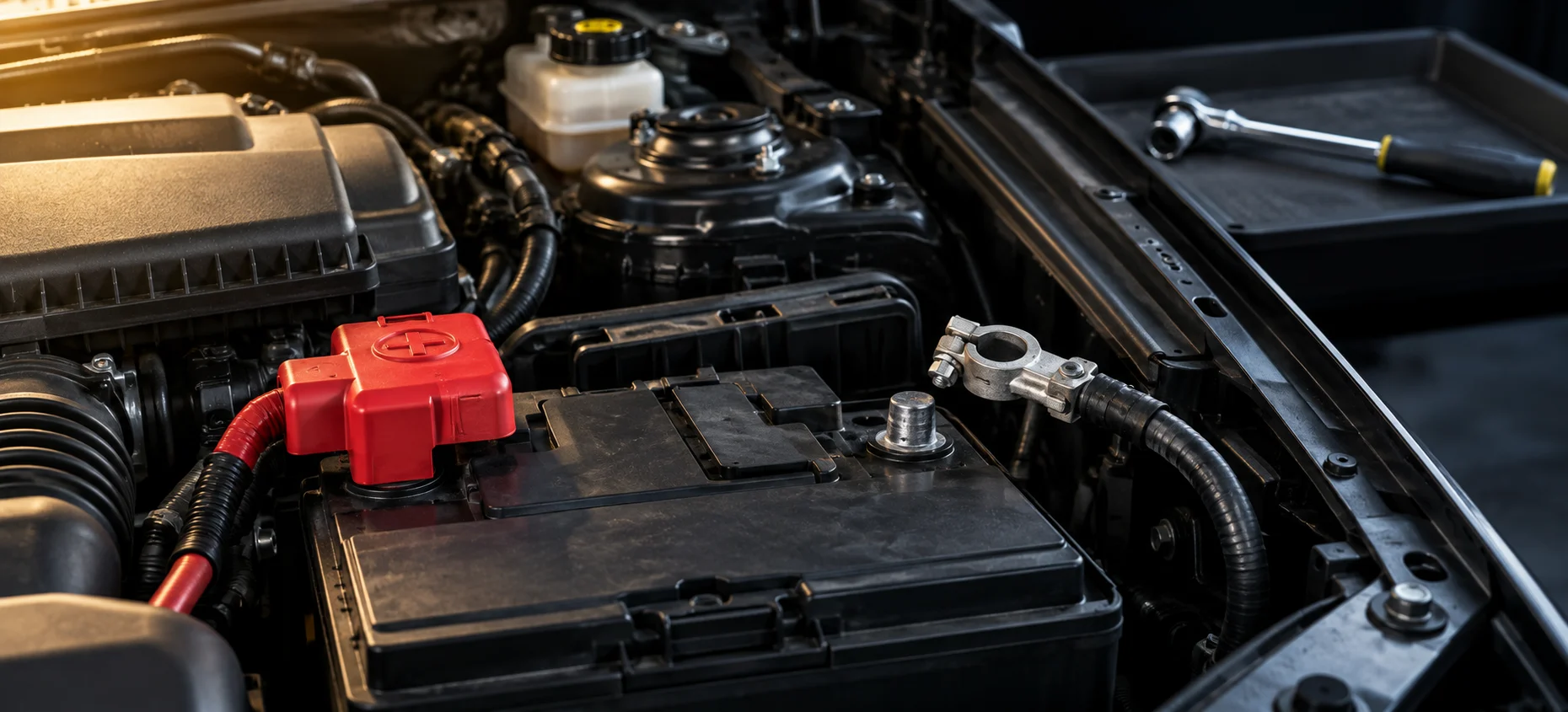
Prefer a checklist you can keep open while you work? Read three pages from the Battery Guide ebook.
How to change a car battery: what should I confirm first?
Replace a car battery when an appropriate condition assessment supports replacement, using the vehicle’s approved specification. Slow cranking or a no-start can also come from discharge, connections or charging faults. Record the symptoms and test findings before buying a battery so the replacement addresses the confirmed problem.
Before replacing a car battery, confirm why replacement has been recommended. A car that will not start may need further testing before you buy a new battery. Keep the symptoms and any workshop report together so the replacement decision has a clear basis.
If you have not established the cause, start with the signs of a dead car battery and the battery-testing handbook section. A successful jump-start alone does not explain the original fault.
Decide whether to test, replace or book service. Match the next step to what you know about the vehicle:
- Battery is flat and the cause is unclear: start with battery testing before buying a replacement.
- Testing supports replacement: use the vehicle fit guide to confirm the part before removing the old battery.
- Access or electronic setup is uncertain: confirm the battery registration requirement and arrange service if needed.
Choose a car battery for your vehicle
Use the exact vehicle details and manufacturer specification to confirm the battery technology, physical dimensions, terminal arrangement and required rating. A conventional lead-acid battery, an AGM battery and an EFB battery are not automatically interchangeable.
For start-stop systems or a vehicle that needs registration, arrange the specialist work before removing anything. VARTA explains the added complexity of start-stop battery replacement. This overview covers conventional 12V starter batteries, not electric-vehicle traction batteries.
How to install a car battery: what is the correct order?
To change a conventional negative-ground 12V starter battery, follow the vehicle’s shutdown instructions, disconnect negative then positive, release the hold-down and remove the battery. Secure the approved replacement, reconnect positive then negative, and complete required setup and checks. Follow vehicle-specific exceptions and arrange diagnostic work when required. Interstate confirms the usual terminal order.
Car battery installation follows the vehicle-specific sequence below. Arrange any required specialist work before starting.
- Prepare. Read the vehicle procedure, identify the battery and arrange access, protective equipment and the correct tools. Switch off the vehicle as instructed.
- Disconnect. For a conventional negative-ground vehicle, the usual order is negative cable first, then positive. Follow the manufacturer procedure and keep disconnected cables clear.
- Remove. Release the hold-down as instructed and lift the battery with suitable support. Keep it upright.
- Install. Position the approved replacement and secure the hold-down. The usual reconnection order is positive first, then negative. Use the specified fastening instructions.
- Finish. Check the installation and complete any manufacturer-required registration or settings procedure before considering the job finished.
AutoZone describes this conventional replacement sequence. If your vehicle instructions differ, follow them or ask a qualified technician.
Keep the negative-first disconnection guide and positive-first reconnection guide together. AAA’s replacement sequence is a reference for conventional systems. Use the exact vehicle instructions for shutdown, fastening and electronic setup.
How long does it take to change a car battery?
Access, preparation and vehicle requirements determine the time needed. A readily accessible conventional battery is a different job from one requiring trim removal or diagnostic work. The ebook title is the product name, not a time guarantee for every car.
Use the car battery replacement tools checklist and replacement-cost guide to prepare. Stop if you encounter damaged parts or an arrangement you cannot safely handle.
What should you confirm before replacing a car battery?
Confirm three things before buying or removing the battery: testing supports replacement, the proposed part is approved for the vehicle, and the complete installation procedure is available. Replacing a car battery is a sequence of checks, not only removing two cables.
- Keep the symptom history and battery test findings.
- Confirm the correct battery size, type and application.
- Arrange the required tools and protective equipment.
- Read the disconnection order and shutdown cautions.
- Plan final checks and any required specialist setup.
Keep the old-battery return arrangements with the receipt. If access, battery handling or the vehicle procedure exceeds your equipment or experience, choose professional installation before beginning removal.
Frequently Asked Questions about Changing a Car Battery
Do I disconnect negative or positive first when changing a battery?
For a conventional negative-ground vehicle, the usual removal order is negative first, then positive. Use the exact manufacturer procedure for the car.
Does every new car battery need coding?
No universal rule applies. Check whether the exact vehicle requires registration, coding or other setup and arrange that work as part of the installation.
Will a new battery fix every no-start?
No. Starting, connection or charging faults can remain after replacement. Establish the cause before choosing a new battery.
For conventional automotive 12V batteries. Follow your vehicle manufacturer's instructions. Banner images are editorial illustrations.