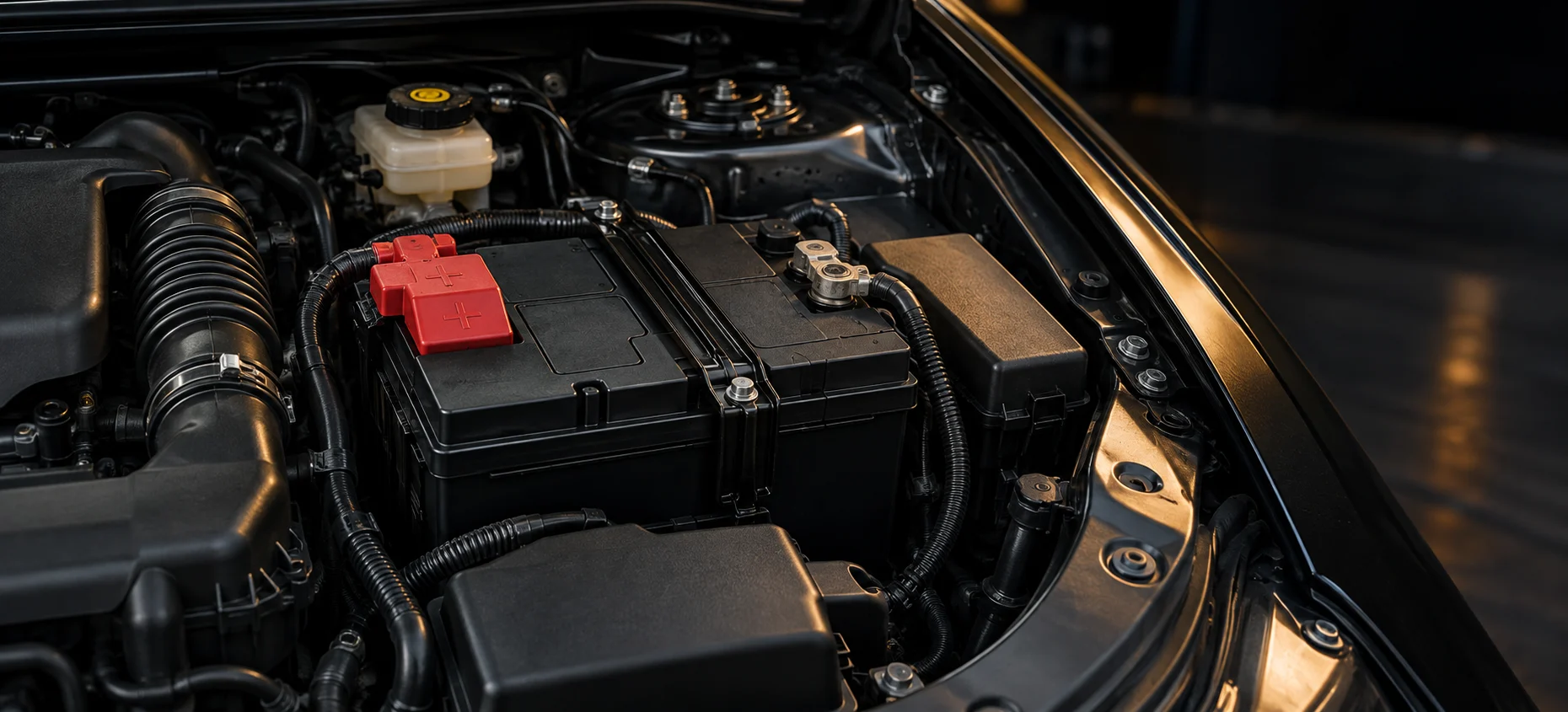
Begin with the vehicle instructions
Identify the battery system and the manufacturer's installation procedure. This article describes the usual conventional negative-ground arrangement, not a universal rule for every vehicle or multiple-battery system. Resolve an unfamiliar arrangement before touching the connections.
Keep the removal and reconnection steps together so you can follow one complete procedure. If someone else removed the battery, confirm what preparation was done and whether any parts or setup requirements remain outstanding.
Understand the usual sequence
VARTA's battery-care guidance describes positive-first reconnection for the conventional arrangement. Identify connections from their markings and the vehicle instructions rather than relying on cable colour alone.
Use the specified fastening method and keep tools from bridging connections. If a clamp is damaged, seized or does not fit normally, stop and arrange qualified help instead of forcing it into place.
AAA’s battery removal and installation guide explains the same order. With the negative cable still disconnected, an accidental touch between a tool on the positive terminal and the vehicle body is less likely to complete a short circuit. Follow the vehicle instructions and keep tools clear of both terminals.
If you are taking the old battery out, see which battery terminal comes off first. Use the battery replacement steps to check what must happen before and after reconnection.
Verify the installation as a whole
Confirm that the replacement is the approved model and that its mounting and connection arrangement match the instructions. Reconnection is not a way to solve an unconfirmed physical fit. Resolve discrepancies while the task is still under control.
Read group size and fit if the replacement looks different from the confirmed order. Ask the supplier to explain the difference before proceeding.
Complete the required follow-through
Follow the manufacturer's instructions for any settings, registration and checks. If a warning remains, ask a technician to assess it rather than assuming it will disappear. Keep the completed work in the vehicle record.
Use installation final checks to organize the handover. The replacement overview connects reconnection to the full sequence, while the disconnection article explains the removal stage. Each stage depends on the same approved vehicle procedure.
What must I check beyond positive-first terminal order?
Positive-first reconnection is only one part of installing a conventional negative-ground 12V battery. Use the complete vehicle procedure, including its shutdown and restart requirements. AAA’s removal and installation guide describes the sequence and the need to secure the battery.
- Confirm the system: identify the approved battery and terminal markings. If it is an unfamiliar or multiple-battery arrangement, stop and obtain the correct instructions.
- Check the installation: verify orientation, mounting and the specified hold-down arrangement before reconnecting.
- Follow the connections: for the conventional arrangement, positive first and negative last. Keep metal tools clear of a bridging path and use the vehicle’s specified fastening method.
- Complete setup: follow required settings, battery registration or other manufacturer procedures. Record any warning that remains.
- Keep the work record: save the part identification, installation date and any workshop setup confirmation.
Do not guess a universal terminal torque or force a clamp that does not seat correctly. If there is damage, leakage or an unclear connection, arrange qualified help. This is not a high-voltage hybrid or electric-vehicle battery procedure.
If the vehicle still will not start afterward, describe whether it stays silent, cranks slowly or cranks normally without running. Use the no-start symptom record rather than repeatedly disconnecting the battery to clear the problem.
For conventional automotive 12V batteries. Follow your vehicle manufacturer's instructions. Banner images are editorial illustrations.