Which battery terminal comes off first?
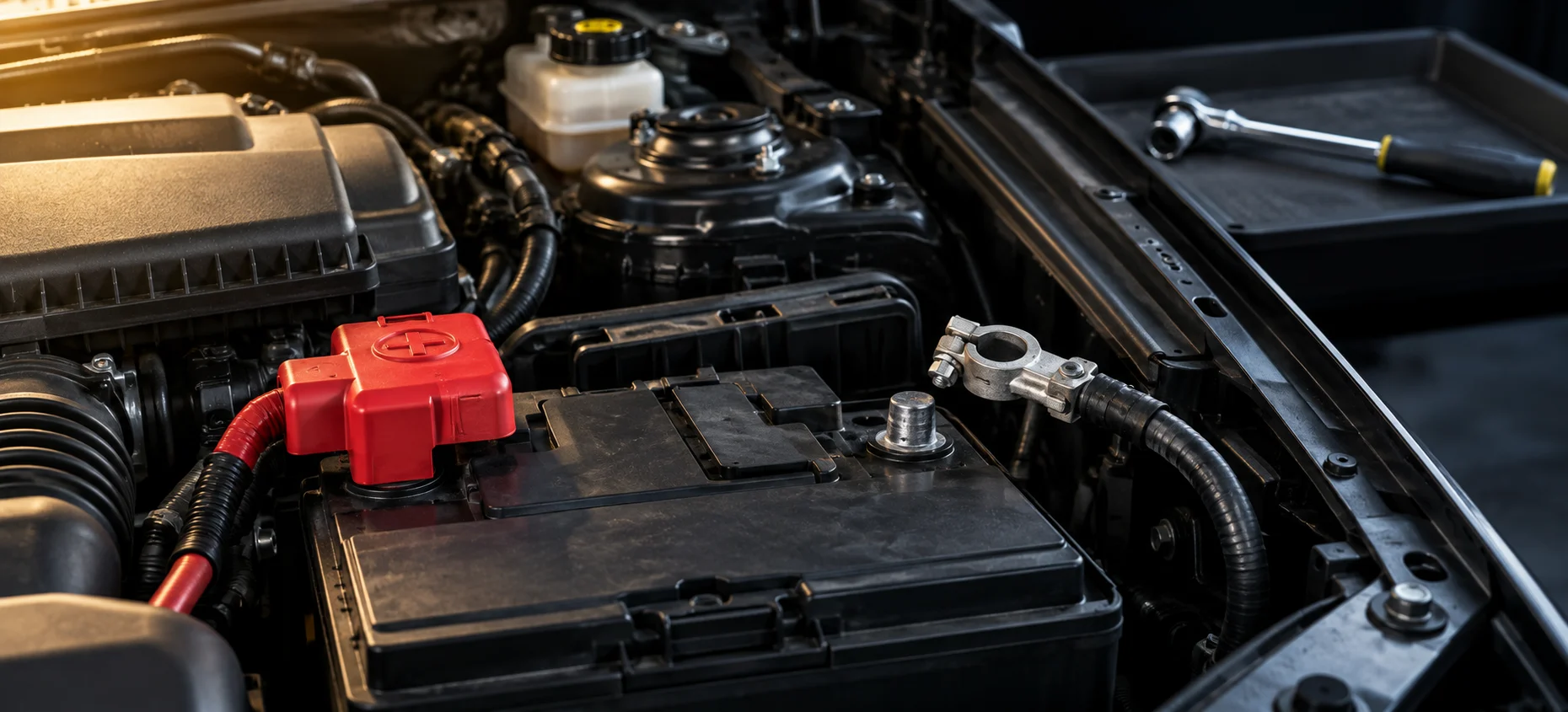
The usual negative-first order reduces the chance of a tool making a short circuit between a live positive terminal and the vehicle body. Identify terminals by their markings rather than relying only on cable colour.
VARTA describes negative-first disconnection and positive-first reconnection for this conventional arrangement. This is not a universal procedure for every electrical system. Check your manual, especially if the vehicle has multiple batteries or unfamiliar connections.
Check which job you’re doing. Use the sequence for your task and follow the procedure for your exact vehicle:
- Removing the battery
- On a conventional negative-ground car, disconnect negative (−), then positive (+).
- Reconnecting the battery
- Connect positive (+), then negative (−). Use the reconnection guide for fastening and final checks.
- Jump-starting the car
- Use the vehicle’s designated jump points and the jump-start procedure. Check both vehicle manuals when using a donor car.
AAA’s battery removal guide also shows the negative-first removal order. Check your owner’s manual for any shutdown steps or battery management requirements before disconnecting.
What should you check before disconnection?
Find the battery location and the manufacturer’s shutdown instructions. Confirm whether loss of power affects settings or requires a specific preparation step. If you cannot identify the approved process, resolve that question before loosening a clamp.
Write down three things: the vehicle procedure you are following, the correct tools and any diagnostic work needed afterwards. Keeping those details together avoids discovering a missing requirement halfway through the job.
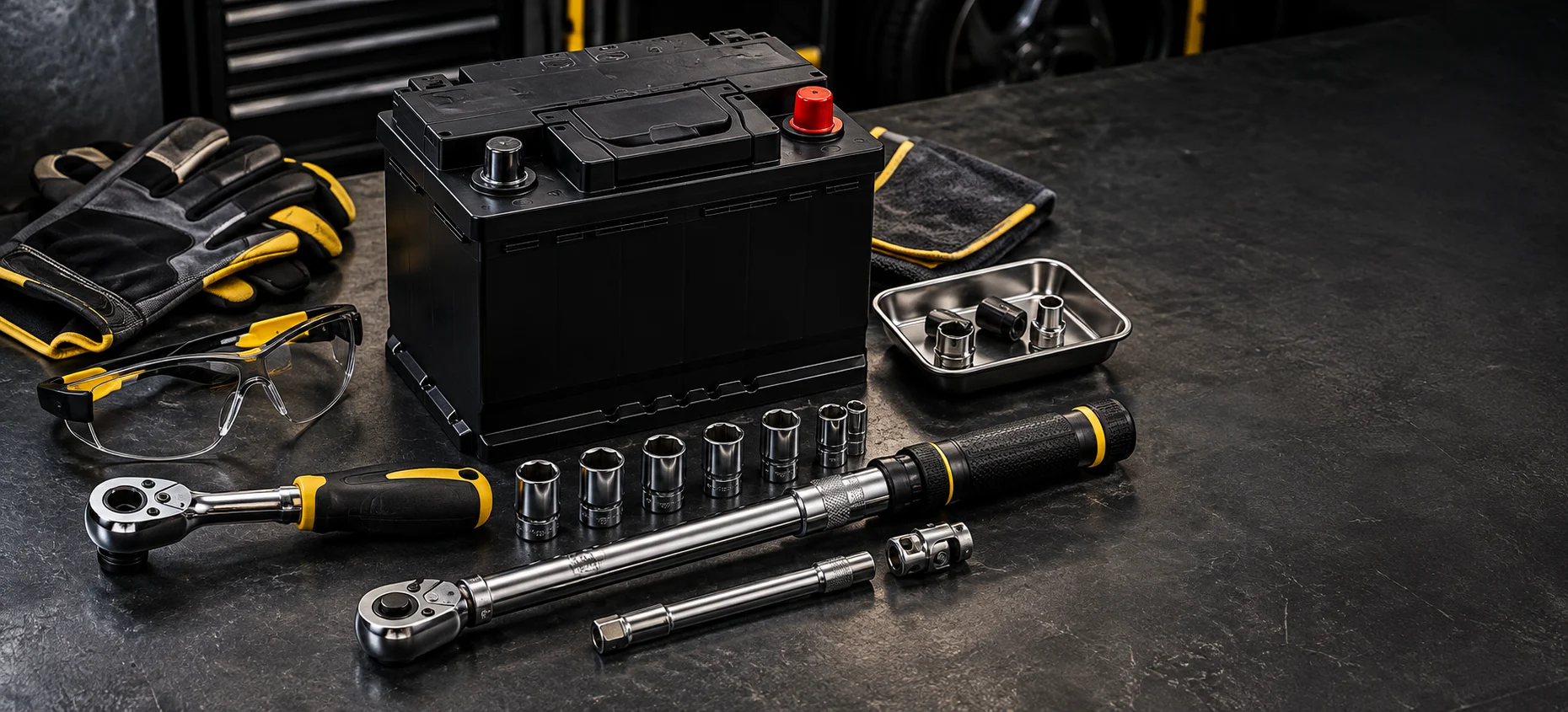
Confirm the wrench size for each clamp and the hold-down before starting.
How do you keep the work organised?
Work through the manufacturer instructions in order. Keep removed fasteners accounted for and disconnected cables secured away from the terminals. Avoid placing tools on top of the battery or using a metal tool in a way that bridges connections.
Do not improvise a removal method for a damaged or seized clamp. Extensive corrosion, leakage, damaged connections or inaccessible fasteners are reasons to ask for help. The replacement tools checklist explains what to arrange before you begin.
What happens when you reconnect it?
The usual reconnection order on a conventional negative-ground vehicle is positive first, then negative. Complete the vehicle’s fastening, settings and registration instructions as required. A secure installation and any remaining warning messages deserve a final check.
If you are disconnecting the battery as part of a replacement, continue with the car battery replacement overview. For battery management systems, read why a new battery may need registration. Terminal order is only one part of the whole procedure.
Use the positive-first reconnection checklist when the replacement is secured and you are ready to reconnect the cables.
Disconnecting battery order: negative first, then positive
For a conventional negative-ground vehicle, the usual disconnection order is the negative cable first, then the positive cable. Identify the minus and plus markings and follow the vehicle’s shutdown procedure before working on a connection. The existing manufacturer-specific cautions in this guide still apply.
When reconnecting that conventional arrangement, the usual order is positive first, then negative. See the reconnection and final-check guide for the scope of those checks. Do not use this sequence as an electric-vehicle traction-battery procedure.
Before starting, confirm access, tools, protective equipment and any settings or battery registration requirements. If a terminal is damaged, identification is uncertain or the approved procedure is unavailable, arrange help before loosening it.
Frequently Asked Questions about Disconnecting a Car Battery
Which battery terminal should I disconnect first?
On a conventional negative-ground vehicle, the usual order is negative first, then positive. Follow the exact manufacturer procedure if it differs.
Which battery terminal should I reconnect first?
The usual order for that same conventional arrangement is positive first, then negative, followed by the vehicle’s fastening and setup checks.
Can I use this guide for a Tesla traction battery?
No. This guide covers conventional low-voltage car battery connections. High-voltage electric-vehicle work requires the appropriate trained repair provider.
For conventional automotive 12V batteries. Follow your vehicle manufacturer's instructions. Banner images are editorial illustrations.