What does a car battery test result actually tell you?
A car battery test report can describe charge, condition or starting performance, depending on the test performed. A low charge result is different from a failed condition result. Before approving replacement, confirm which battery was tested, which settings were used and what the technician recommends doing next.
VARTA’s testing guidance distinguishes state of charge from state of health and explains why the assessment must suit the battery technology. A voltage reading alone cannot settle every starting problem. Use the report alongside the symptoms, rather than treating one number as a complete diagnosis.
The three examples below are fictional teaching examples. They are not measurements from a real vehicle, tester screenshots or universal pass/fail limits.
Which details should appear on the report?
Ask the provider to record the battery identification, battery technology, rating entered into the tester, test method, result and recommended next step. If the tester asks for a rating standard, it should match the label and the equipment instructions. A mistyped rating or wrong battery selection can make a report difficult to interpret.
- Battery: model, technology and the relevant label rating and standard.
- Conditions: date, starting complaint and recent charging, driving or assisted starts.
- Method: voltage check, conductance test, load test or another identified assessment.
- Finding: the result and any limitation reported by the equipment or technician.
- Action: charge, retest, replace or investigate another part of the system, with a reason.
Ask for a written copy or a photograph of the printout. Do not compare a bare number with an unrelated internet chart. The resting-voltage guide explains why measurement conditions matter.
Example 1: what does “charge and retest” mean?
“Charge and retest” means the present assessment does not yet settle the battery’s condition. Confirm that charging is appropriate, use equipment approved for the battery and vehicle, and arrange the requested follow-up test. The phrase is a next step, not proof that a replacement is already necessary.
Example note: The car was parked for several weeks and needed an assisted start. The provider recommends charging and another condition test. The owner asks who will charge it, which procedure applies and when the follow-up should happen. The decision is deferred until the assessment is complete.
Keep the first and second reports together. If the battery passes afterward but discharges again, ask what will be checked for an ongoing drain or charging problem. See charging versus replacement for the wider decision.
Example 2: what should I ask after a replace recommendation?
A replace recommendation should be accompanied by an explanation of the condition findings and the test conditions. Ask whether any required charging or retesting was completed, whether the battery was correctly identified and whether warranty coverage applies. Then confirm an approved replacement and the complete installed quote.
Example note: A workshop completes the appropriate assessment and explains why the existing battery cannot provide the performance required. The owner requests the test report, the proposed battery specification, warranty terms, installation work and any required registration. The owner compares the same part and service scope before agreeing to the work.
Use the quote comparison worksheet and calculator to keep the amount due now separate from any confirmed later core refund. A good diagnostic explanation and a clear price answer different questions; request both.
Example 3: why can a car still fail to start after the battery passes?
A passing battery assessment does not rule out every starting fault. Connections, the starter, the charging system or an electrical drain may need investigation, depending on the symptom. Tell the technician whether the engine cranks slowly, clicks, cranks normally without starting or repeatedly needs an assisted start.
Example note: The battery passes its assessment, but a starting fault returns after the vehicle sits overnight. The owner records the parking duration and the exact starting behavior, then asks the workshop what further checks would explain that pattern. A second battery is not bought merely because the symptom returned.
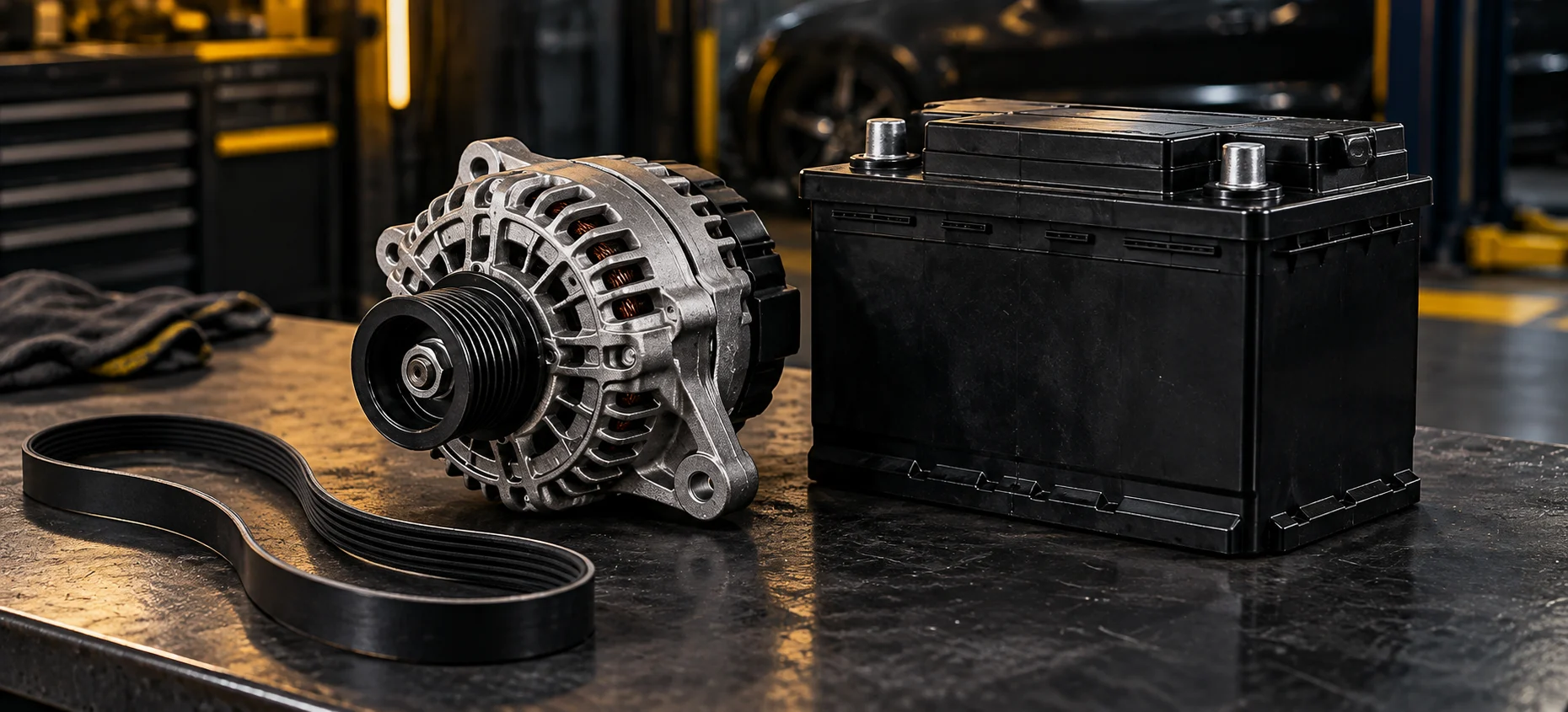
Interstate’s battery FAQs describe overlapping starting symptoms and causes of repeated discharge. The battery-or-alternator explanation can help organize the questions without claiming to diagnose the vehicle remotely.
What can I copy into a useful battery test record?
Copy the following headings into a note and fill in only confirmed information. Leave unknown fields marked “not confirmed” so a later reader can distinguish a fact from an assumption. Keep the provider’s actual printout with the note.
- Date, vehicle and provider.
- Exact symptom and when it happens.
- Battery model, technology, rating and rating standard.
- Test method and conditions reported by the provider.
- Reported finding and the technician’s explanation.
- Charging, retesting or other investigation still required.
- Work approved, follow-up date and whether the original symptom returned.
This record is useful whether you keep the battery, arrange repair or buy a replacement. Its purpose is continuity between visits, not collecting more readings without a diagnostic plan.
When should I stop and get professional help?
Stop handling or testing a battery that appears damaged, leaks, is unusually hot or may be frozen. Follow the vehicle and battery instructions and ask a qualified provider to assess it. Do not open a sealed battery or improvise a test when access or the measuring procedure is unclear.
This article concerns conventional automotive 12V starter batteries. High-voltage hybrid or electric-vehicle traction packs require a different service process. If the report identifies an unfamiliar battery type or a vehicle-specific setup requirement, resolve that point before continuing. Read the free testing overview for the preparation questions.
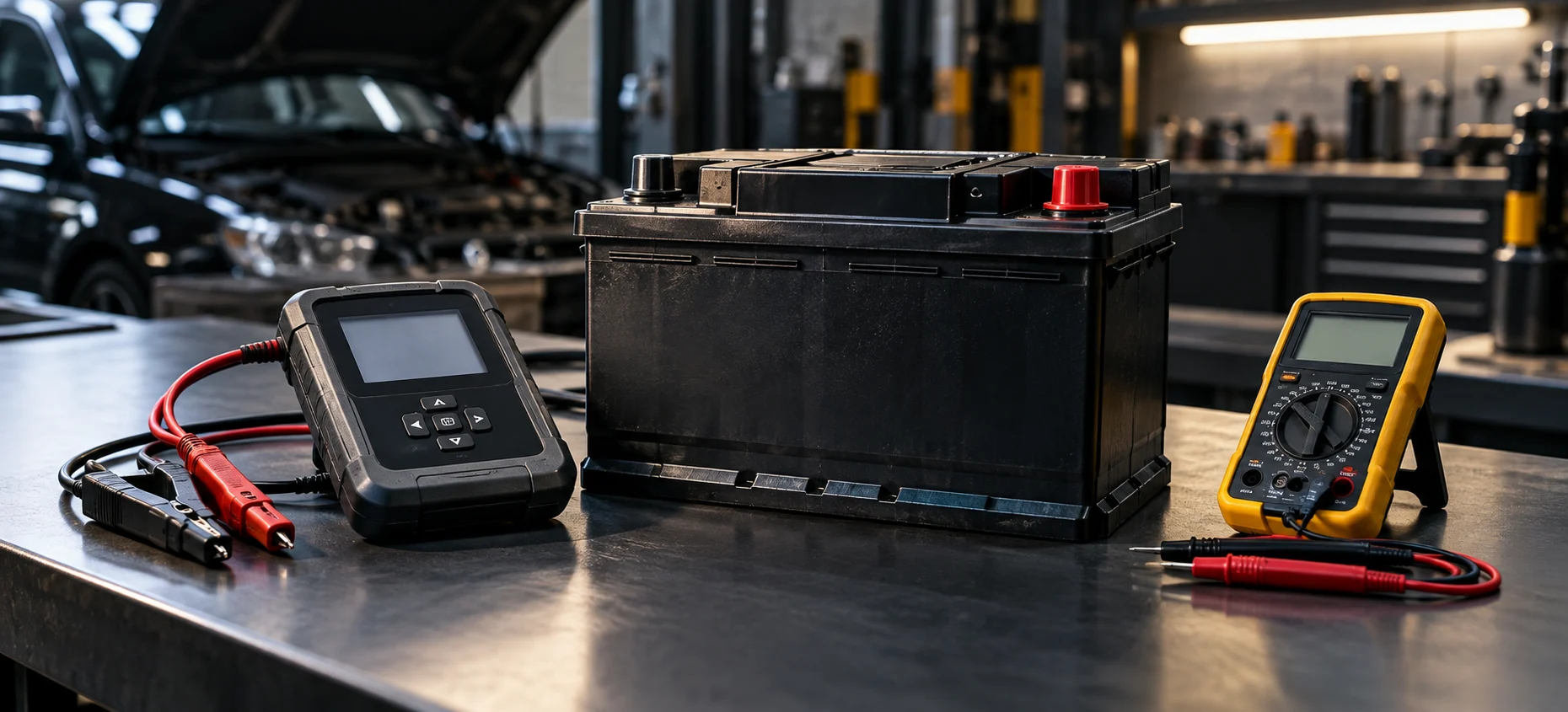
For conventional automotive 12V starter batteries. Follow the vehicle and equipment instructions. The examples are fictional; the banner is an editorial illustration.