Start with the sequence of events
Tell the workshop whether the vehicle struggled before starting, developed warning messages while running or failed after a period parked. Include whether a new battery was recently fitted and whether the same symptom has returned.
This sequence can guide the investigation without proving the cause. Keep the original observations intact. Avoid rewriting them as a definite alternator or battery diagnosis before the tests have been explained.
Understand the overlapping symptoms
AutoZone's alternator guidance describes overlap between weak-battery and charging-system symptoms, including starting difficulties and electrical warnings. A warning light deserves investigation rather than an automatic battery purchase.
Ask the technician what was assessed and which findings support the recommendation. If a battery is replaced, ask whether the original charging concern has also been addressed. A new part should not end the conversation while the cause remains unclear.
Ask for a complete explanation
- What did the battery condition test show?
- Were the charging system and relevant connections assessed?
- Does the proposed repair explain the timing of the symptom?
- What should you do if the warning or no-start returns?
Keep any test printout and repair scope with the receipt. This provides a reference for a follow-up visit instead of starting a second investigation from memory.
Choose the next step from evidence
If the findings support a charging-system repair, ask how the battery will be assessed afterwards. If they support a battery replacement, confirm the approved specification and final checks. If the outcome is uncertain, ask what further investigation is needed and agree the scope before more parts are ordered.
Read battery testing for questions about the report, then installation final checks if replacement goes ahead. The useful outcome is an explained repair decision and a follow-up plan, rather than confidence based on a single symptom or a general online fault list.
Alternator vs battery: what is the difference?
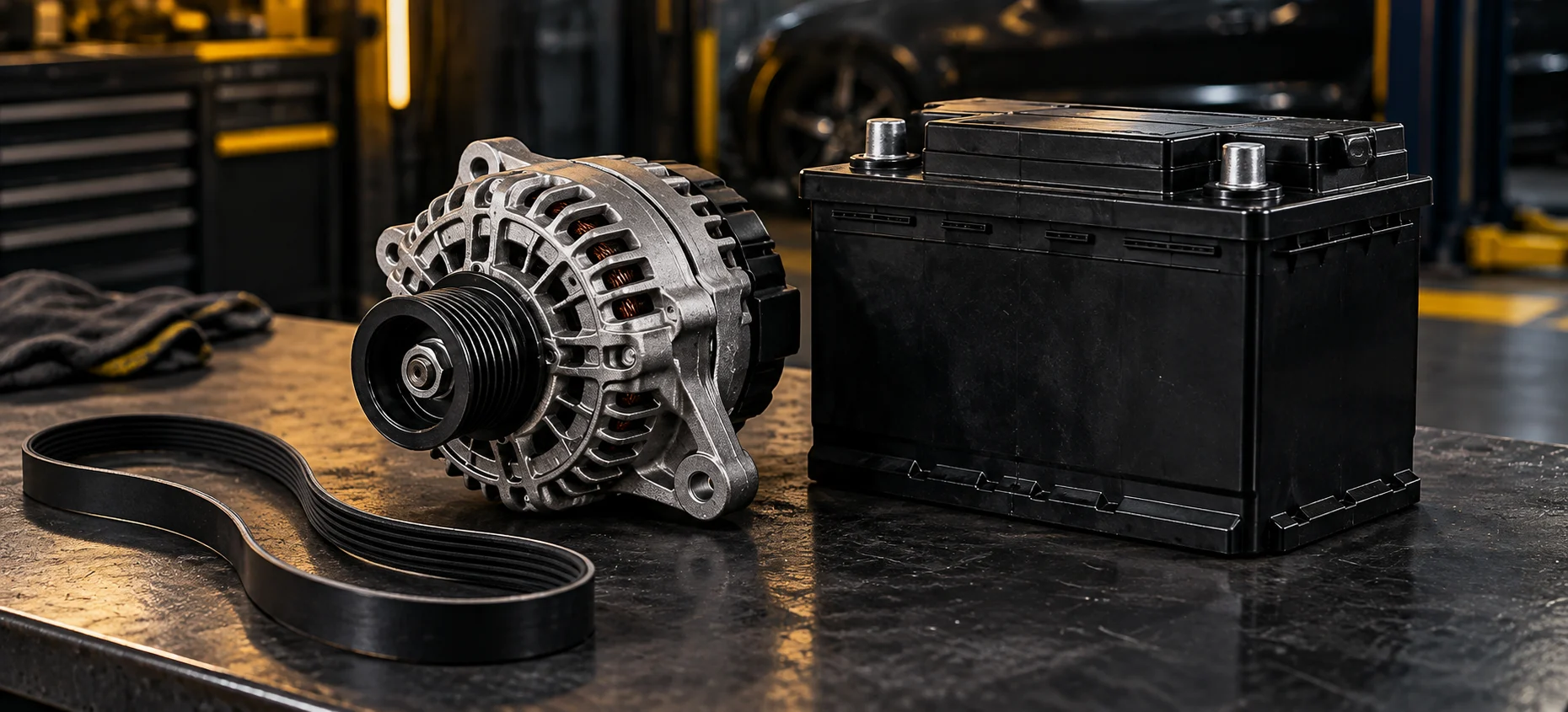
In a conventional combustion-engine vehicle, the battery supplies energy for starting and electrical loads when the engine is off. The alternator supplies electrical power and charges the battery while the engine runs. A charging fault can therefore leave the battery discharged even if the battery was initially serviceable.
The symptoms overlap. AutoZone battery and alternator testing information lists starting trouble, electrical problems and battery warning lights across its battery and alternator guidance. Testing is more useful than choosing a replacement solely from one symptom.
- Before starting: describe slow cranking, clicking or no cranking.
- While running: record warning messages or unusual lighting behavior.
- After parking: note how long the vehicle was unused before the problem returned.
- After a repair: say whether the same concern remained after a battery replacement.
Ask which battery, charging-system and connection tests explain that pattern. If charge is low, discuss charging and retesting versus replacement. If replacement is supported, use the battery selection checklist.
Frequently Asked Questions about Alternator vs Battery Symptoms
Can an alternator problem cause a dead battery?
Yes. A charging-system fault can leave the battery short of charge. Ask for both systems to be assessed when the cause is unclear.
Does the dashboard battery light mean the battery needs replacing?
Not by itself. Treat the warning as a reason to check the relevant vehicle instructions and investigate the charging system.
Where can I ask for battery and alternator testing?
Ask a qualified workshop or an eligible parts-store testing service. AutoZone advertises testing subject to location, equipment availability and vehicle restrictions; confirm eligibility before visiting.
Car not starting but the battery is fine: what next?
First establish what “fine” means. Working lights or a voltage reading do not prove that the battery and connections can supply the required starting power. If appropriate testing supports a serviceable battery, the next investigation depends on whether the engine does not crank or cranks without starting.
In AutoZone’s starter-versus-battery explanation, the starter and its electrical circuit are part of the no-start assessment. Use the symptom to request a test, rather than ordering a starter or alternator from an online description.
- No crank or only a click: describe the sound and ask about the battery, connections and starting circuit.
- Engine cranks but does not start: tell the workshop that distinction so it can follow the correct diagnostic process.
- Discharge returns after charging or replacement: give the timing and ask what explains the loss of charge.
- Warnings while running: follow the vehicle’s instructions and arrange the relevant system assessment.
Do not disconnect a battery while the engine is running as an alternator test. Use the approved diagnostic procedure and a qualified provider. Our battery test guide helps you discuss the report; the mobile service checklist explains what to confirm if the car cannot be moved.
Frequently Asked Questions about a Car That Will Not Start
Can a car fail to start even when its battery tests good?
Yes. A serviceable battery does not establish that the connections, starting circuit or other systems are working correctly. Explain whether the engine cranks and request the appropriate diagnosis.
Do working lights prove the car battery is fine?
No. Lights working does not prove that the battery and its connections can deliver the current needed to crank the engine. Ask what testing supports the assessment.
For the detailed checklist, read Car Not Starting but Battery Is Fine? What to Check.
For conventional automotive 12V batteries. Follow your vehicle manufacturer's instructions. Banner images are editorial illustrations.