Describe what you can see
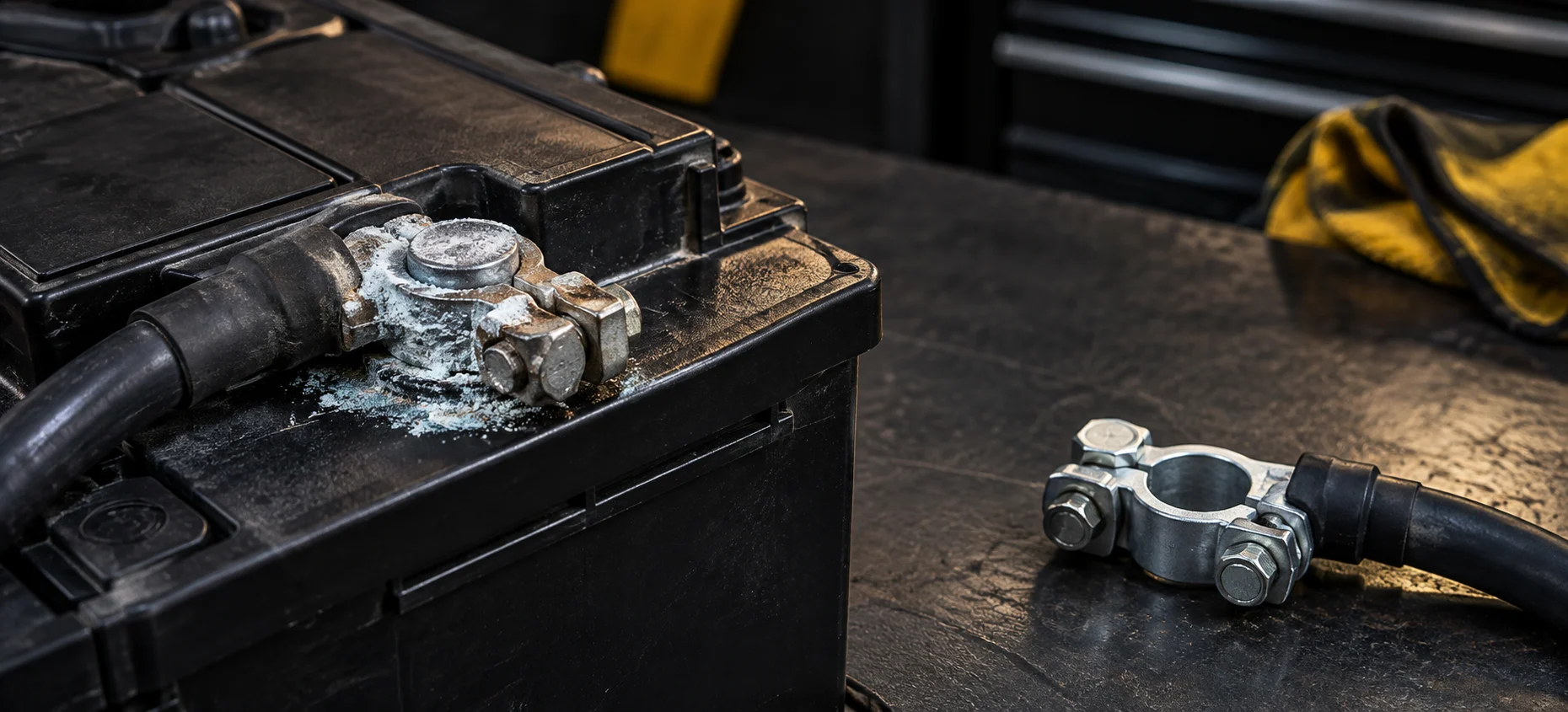
Note which connection has deposits and whether starting reliability has changed. If it is safe to photograph the area without disturbing anything, keep the image with your symptom notes. Avoid reaching into an unfamiliar engine bay simply to obtain a better photograph.
Give the workshop a clear description rather than deciding that visible deposits explain every electrical symptom. Ask it to assess the battery, connections and relevant mounting arrangement together.
Ask for an appropriate inspection
Interstate's automotive battery guidance identifies corrosion among warning signs worth checking. The useful next step is inspection, not an automatic purchase or an improvised cleaning process.
If the case appears damaged or leaking, or the deposits are extensive, arrange professional assessment. Follow the manufacturer instructions for handling and maintenance. This article does not prescribe a chemical mixture or a removal technique for an unknown battery.
Clarify the scope of any repair
Ask whether the recommended work concerns the connection, the battery itself or another issue. Confirm how the diagnosis was reached and which final checks will be performed. Keep replacement parts and labour clearly identified in the quote.
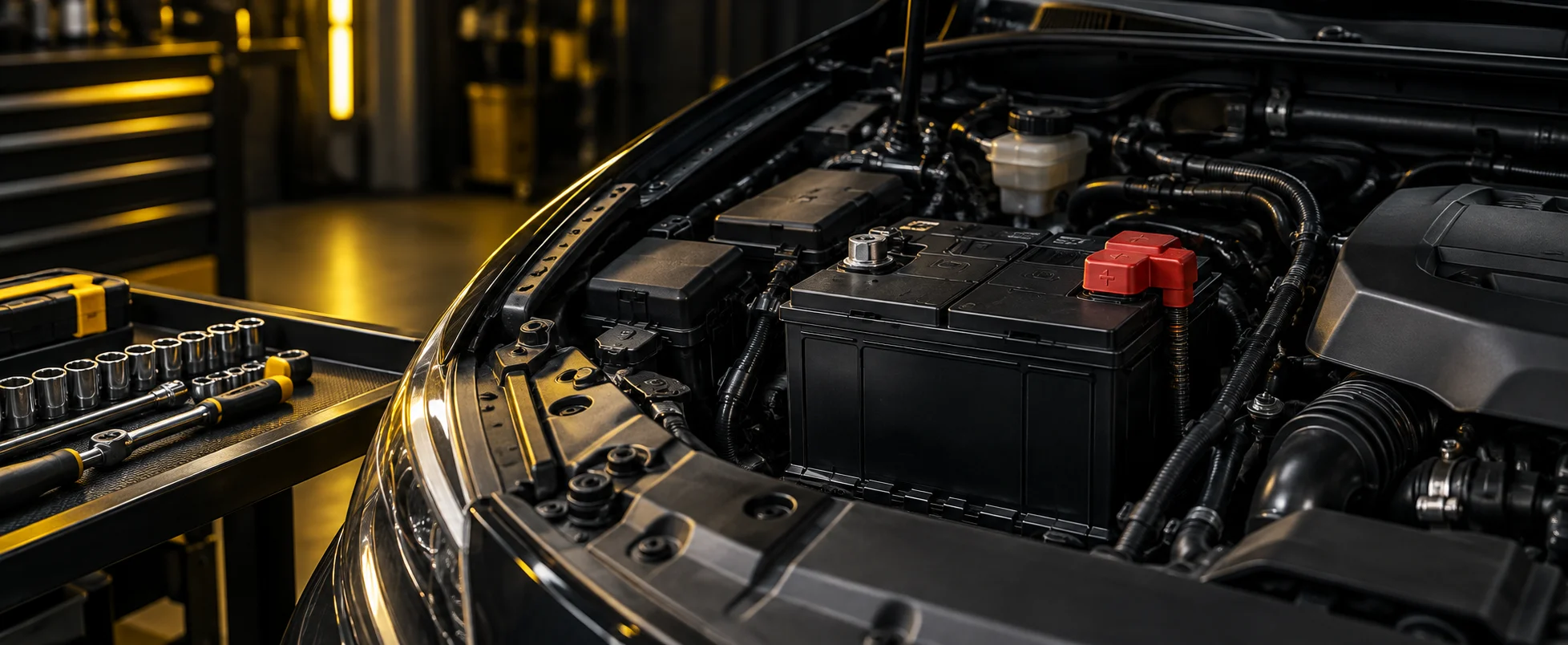
If battery removal is required, ask whether the vehicle has preparation or registration requirements. The disconnection overview explains why terminal order belongs within a complete manufacturer procedure.
Car battery terminal replacement is a connection repair, while battery replacement changes the battery itself. Ask whether the findings call for battery terminal replacement, cable work or a new battery, and have the technician define the specific repair.
Keep a follow-up record
After work, retain the inspection findings and receipt. If deposits or starting problems return, note when they reappeared and arrange follow-up with that history. Do not repeat maintenance indefinitely without understanding why the problem persists.
Read installation final checks for organizing the handover and battery testing for the condition-report questions. A clearly explained assessment helps you choose the right repair while avoiding a battery purchase based only on a visible surface symptom.
For conventional automotive 12V batteries. Follow your vehicle manufacturer's instructions. Banner images are editorial illustrations.