Separate the deposit from the part price
Ask the supplier to show the battery price, any core charge and the payable total separately. Find out when the charge can be refunded and what must be returned. Keep those answers with the receipt rather than relying on an assumed standard policy.
If the old battery is returned during professional fitting, ask how the transaction appears on the final bill. If you will return it later, agree the practical arrangements before removing it.
Example with two quotes for the same battery: Quote A is $160 plus a $22 refundable core charge, so you pay $182 at checkout and $160 after a confirmed $22 refund. Quote B is $175 with no deposit. With all other charges equal, Quote B costs $7 less today, while Quote A costs $15 less after the refund. These figures are illustrative.
Confirm the seller's requirements
- Which old battery is accepted for this transaction?
- What proof of purchase or return document is needed?
- Is there a return deadline under the seller's terms?
- How and when is the deposit refunded?
The replacement-cost guide places the deposit alongside labour, setup and taxes. This avoids comparing a price that includes a temporary deposit with one that assumes an immediate return.
What to bring: Take the old battery the seller agreed to accept and the purchase receipt or order record. Sam’s Club’s battery policy ties its core refund to a battery purchased there. O’Reilly’s core-return instructions list the original receipt or online purchase documentation and, when applicable, the card used for purchase. Confirm your battery’s eligibility, return location and deadline with the seller before transporting it.
Plan collection and handling
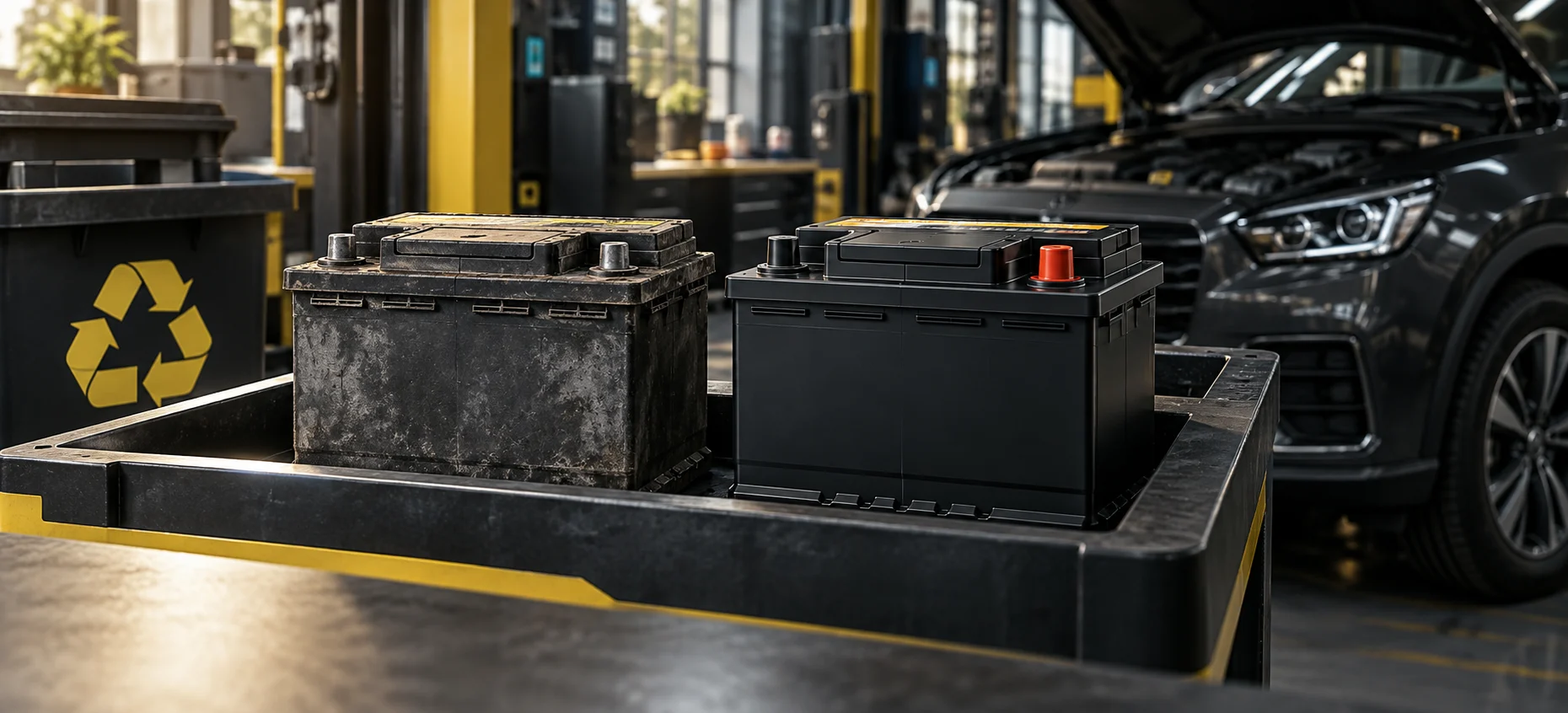
The US EPA's collection overview describes the retailer and dealer network used for lead-acid battery collection. Arrange an accepted route with the supplier or an appropriate local collection service.
Follow the collector's handling and transport instructions. If the battery is damaged or leaking, explain its condition and arrange suitable help rather than transporting it casually. Do not treat it as ordinary household waste.
Close the transaction clearly
Retain the return receipt and check that the refund or credit matches the agreed terms. Keep the new battery's purchase and warranty records separately so they remain easy to find when a future question arises.
If the transaction is unclear, contact the seller with the original quote and both receipts. This article explains the questions to ask; it does not state a universal deposit amount, deadline or legal rule. The useful outcome is a confirmed return route and a complete record of what you paid and received back.
Use the free battery quote worksheet to record the checkout total, the confirmed refund and your final cost in separate fields.
Use the quote calculator to see how a confirmed later refund changes the total you pay.
How does a battery core return work?
A battery core return means taking an accepted old battery back under the seller’s deposit-refund terms. Keep the purchase receipt, confirm the accepted battery and deadline, then retain the return record showing the refund or credit. Recycling acceptance and eligibility for a particular purchase refund are separate questions.
The US EPA’s lead-acid collection overview describes the role of retailers, dealers and household hazardous-waste collection programs. Contact an appropriate collector for the old battery and its condition; a national overview does not establish one store’s refund policy.
- Before buying: ask what deposit is collected and what qualifies for its refund.
- Before returning: confirm the location, documents, deadline and handling instructions.
- At return: obtain a receipt identifying the core credit and refund method.
- Afterward: match the credit with the purchase record and resolve any difference with the seller.
When comparing offers, keep a refundable core charge separate from a nonrefundable disposal or service fee. Ask the seller to explain each line rather than assuming they have the same purpose. The quote worksheet records both the checkout amount and the cost after a confirmed refund.
Frequently Asked Questions about Battery Core Returns
Can I return an old car battery without buying a new one?
Ask an appropriate retailer or collection program whether it accepts the battery for recycling. Acceptance does not automatically entitle you to the deposit refund from an unrelated purchase.
Is a battery core charge the same as a disposal fee?
No. A core charge is a deposit associated with a qualifying old-battery return. Ask whether any separate disposal or service fee is refundable and what it covers.
What if I cannot safely transport the old battery?
Describe the battery’s condition to the installer or collector and arrange suitable collection or professional handling. Follow their instructions, especially for a damaged or leaking battery.
How do I check the core refund against my receipt?
Match the credit to the deposit you actually paid. Use the receipt, not a general advertised core amount. A recycling acceptance slip, a refund receipt and a discount on a new battery describe different transactions.
Fictional receipt example: the battery costs $160 and the seller collects a $20 refundable core deposit. Ignoring tax solely to keep the example simple, you pay $180. If the seller later accepts the eligible core and refunds $20, your net cost is $160. You have recovered a deposit, not received an extra $20 discount on the $160 battery.
Different checkout: if the seller accepts the old battery immediately and your receipt shows that the deposit was already waived or credited, do not subtract another $20 later. Use the actual amount paid and the documented credit. These figures illustrate arithmetic only; they are not a retailer’s price or refund policy.
- Find the original core-deposit line and the amount collected.
- Check the seller’s accepted battery, return location, deadline and proof requirements.
- Keep the core-return receipt and identify the refund method.
- Match any later credit with the purchase record. Ask the seller about an unexplained difference.
For a store-specific example of why recycling and refunds differ, Sam’s Club’s policy distinguishes accepting members’ batteries for recycling from refunding the core charge on a battery purchased there. Do not apply one retailer’s terms to another. Use the checkout and later-refund calculator when comparing two confirmed offers.
For more detail, read Battery Core Return Without a Receipt: What to Check First.
For more detail, read Rural King Battery Core Charge: Pickup and Return Checklist.
For conventional automotive 12V batteries. Follow your vehicle manufacturer's instructions. Banner images are editorial illustrations.